The spacing effect: why little and often beats cramming
Same amount of study, spread out instead of stacked up, and you remember far more.
The learn-co.de team
15 June 2026
5 min read
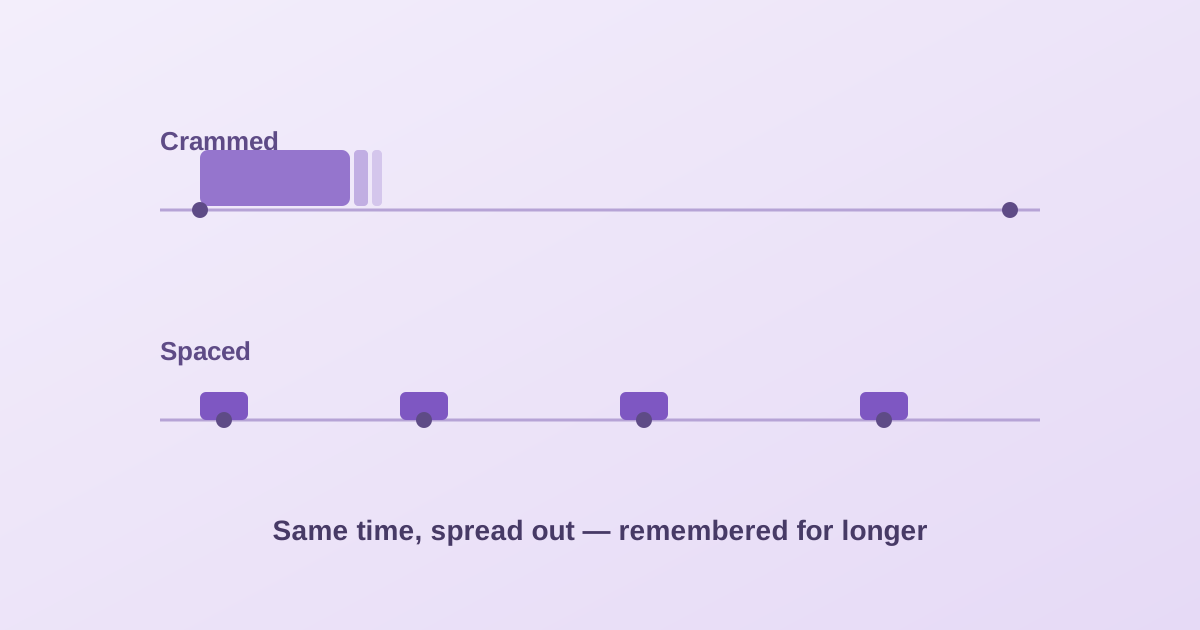
Here is one of the most reliable findings in all of learning research, and one of the least intuitive. Take a fixed amount of study time and spend it all in one sitting, and you'll do fine on a test tomorrow. Take that same time and spread it across several shorter sessions, days apart, and you'll do worse tomorrow — but far, far better in a month.
This is the spacing effect, and the catch is right there in that trade-off. Spacing feels harder. Each time you come back you've forgotten a little, so you have to work to recover it, and that effort reads as failure even though it's the very thing building durable memory. Cramming feels great and fades fast; spacing feels rough and lasts.
For a teacher the practical question is not whether spacing works — it does — but when to bring a topic back. Too soon and there's nothing to recover; too late and it's gone entirely. The sweet spot moves further out every time a pupil succeeds, which is the idea behind…
✍️ This article is still being written — check back soon for the rest.